Palawan Food Beyond the Island-Hopping Lunch
What to eat in Palawan: tamilok ceviche in Sabang, danggit breakfast in Coron, lato seaweed on the beach, and where each dish actually lives.
On prices: the figures on this page were gathered in September 2026 and are given as bands rather than current quotes. Rates, fees and timetables change every season - check with the operator before you book.
Palawan Food: What to Eat and Where to Find It, from Tamilok to Beachfront Boodle Fights
You are standing in Puerto Princesa with an empty stomach, an ATM that just rejected your card, and no idea whether tamilok is a delicacy or a dare. Palawan food rewards the prepared: the best dishes are hyper-local, cash-only, and served in places that do not appear on reservation apps. This guide is structured by dish, not by restaurant, because the food is the draw and the stall names change. Each entry gives you the town, the real context, and the anchor point you can navigate to when data signal dies.
Tamilok is not a worm. The Teredinidae family shipworms harvested from dead mangrove wood are molluscs, biologically closer to oysters than to anything crawling. In Puerto Princesa and Sabang village, they are served raw, dipped in vinegar with chilli and onion, kinilaw-style. The texture is soft, oyster-like, briny. Kinabuchs on Rizal Avenue serves them as a starter, though you will find cheaper versions at the Sabang beachfront shacks near the Underground River jump-off. Order before 19:00, when generators in Sabang shut off and kitchens close. Cash only.
Crocodile meat is breakfast food. Crocsilog, crocodile meat silog, appears at Kinabuchs and at local tapsilogan around the city. The meat is farmed, not wild, and tastes like lean pork with a slight spring. Kinabuchs also does crocodile sisig, served sizzling. Arrive before 20:00; the grill runs out.
Cashew nuts are the airport souvenir that is actually worth eating. The Municipality of El Nido and northern Palawan produce the bulk of the island's crop, harvested February to May. Roasted nuts, honey-glazed bandi brittle, turrón de kasoy, and kasoy wine are sold roadside near Puerto Princesa Airport and at the pasalubong centres along Rizal Avenue. Skip the airport terminal markup; the stalls 500 metres outside on the main road sell the same bandi for less per pack. The nuts turn rancid fast in humid storage, so buy from high-turnover vendors, not decorative gift shops.
Palawan Local Dishes: What Actually Belongs to Each Town
Palawan local dishes map to specific towns because infrastructure dictates supply. You will not find fresh marinated rabbitfish in Puerto Princesa, and you will not find a proper boodle fight in Coron. Eat in the right place or eat the wrong thing.
Coron: Marinated Rabbitfish and the Breakfast Economy
Danggit lamayo is breakfast, not dinner. Sun-dried rabbitfish, marinated in vinegar and garlic, then garlic-fried to crispness, is the dish that starts Coron town's day. The name combines the dried fish with lamayo, the pre-frying marinade. It is served with garlic rice, egg, and vinegar-onion dipping sauce at open-air grills along Don Pedro Street from 06:00. KT's Sinugba sa Balay does a reliable version with rice and coffee. The fish is sold by weight from ice displays at the public market: dried fish per kilogram will feed four. Buy before 08:00, when tour groups strip the supply.
The grilled-by-weight system dominates Coron and El Nido seafood houses. Diners select whole lapu-lapu (grouper), maya-maya (red snapper), tangigue (Spanish mackerel), squid, or prawns from an ice display. Prices run 80-120 PHP per 100 grams before cooking. Garlic-fried, inihaw (grilled), or paksiw (vinegar stew) are standard preparations. La Sirenetta, the over-water deck spot, charges at the high end but offers the only table with a view of the harbour at sunset. Cash only.
El Nido: Lato Seaweed and the Beachside Default
Lato seaweed is the dish that costs almost nothing and delivers. Grape-like green seaweed, sea grapes, served with vinegar-onion dressing, appears at every beachside grill in El Nido town and on island-hopping lunch spreads. The texture is popping, saline, a palate cleanser between bites of grilled pork. Artcafé on Calle Hama does a version with diced tomato, though the shacks on Seven Commando Beach serve it fresher for less.
El Nido's food scene clusters on the beachfront and Calle Hama: backpacker cafes, pizza-grill bars, mid-range Filipino-international kitchens. Trattoria Altrove does wood-fired pizza with no reservations, which means a 45-minute wait from 19:00. The island-hopping lunch inclusion, cooked by boat crew on portable charcoal grills at beach stops, is grilled fish, pork or chicken skewers, steamed rice, cucumber-tomato salad, and fresh fruit. Vegetarian alternatives require advance request, not standard. Water and soft drinks provided; alcohol not standard but may be brought by guests.
Port Barton: The Seafood Platter as Default Meal
Port Barton has no dining scene, only the catch. Grilled squid and parrotfish on sand-floor tables, cash-only, is what you eat because there is nothing else. The town runs on generator power, with electricity 14:00-06:00 only. Kitchens operate on the same schedule. Select your fish from the morning catch at 16:00, before the generators start and the grills fire. Prices are negotiable, 400-600 PHP for a platter feeding two. The parrotfish, bright blue and green when alive, turn white and flaky on the grill. Eat with your hands; utensils are often plastic and break.
Tamilok Woodworm: the Dish That Requires Context
Tamilok woodworm is the most misrepresented dish in Palawan food. Travel blogs call it a worm, photograph it for shock, and miss that it is a sustainable mollusc harvest from rotting mangrove timber. The Teredinidae family bores into dead wood, not living trees, and the harvest removes invasive shipworms from timber that would otherwise collapse.
The preparation is kinilaw in form: raw, sliced lengthwise to expose the pale body, dressed with native coconut vinegar, red onion, and bird's eye chilli. The flavour is marine, slightly metallic, with the same iodine edge as fresh oyster. The texture is the barrier for most eaters: soft, yielding, not crisp like ceviche fish.
Kinabuchs in Puerto Princesa serves tamilok as a starter, presented on ice with the dressing on the side. The Sabang beachfront shacks, 2 hours by van from the city, do larger portions for less, though the hygiene is variable. Eat tamilok the day it is harvested; the mollusc spoils faster than fish. Ask when it was pulled. If the vendor hesitates, order the crocodile sisig instead.
The dish appears on no fixed menu. It is catch-dependent, weather-dependent, and disappears when mangrove access is flooded. July to mid-October, the monsoon season, brings rains that make the harvest dangerous and the supply intermittent. Do not plan a trip around eating tamilok in August.
Danggit Lamayo Coron: the Specific Preparation That Defines the Town
Danggit lamayo Coron is not generic dried fish. The lamayo marinade, a mix of vinegar, garlic, and sometimes calamansi, distinguishes Coron preparation from the plain dried rabbitfish of Cebu or Bohol. The fish is butterflied, marinated for hours, then sun-dried on bamboo racks. The final step, deep-frying at the point of service, creates a texture that shatters between teeth.
The dish is breakfast food because it is heavy, salty, and demands rice. Coron town's economy runs on diving, and divers eat early. The grills along Don Pedro Street open at 05:30, with the marinated fish ready by 06:00. Lolo Nonoy's Food Station, the low-key local staple spot, serves it with garlic rice and a fried egg. The public market, 10 minutes by tricycle from the harbourfront, sells the dried raw product for home preparation: priced per kilogram in peak season, February to May, when drying conditions are optimal.
The failure case: you arrive at 09:00, after the tour groups have eaten and the grills have moved to lunch service. The fish is gone. The alternative is tapsilog or canned sardines at a convenience store. Wake early, or skip it.
| Dish | Town | Anchor Point | Typical Cost | Payment |
|---|---|---|---|---|
| Tamilok | Puerto Princesa | Kinabuchs, Rizal Avenue | 180 PHP | Cash only |
| Tamilok | Sabang | Beachfront shacks near wharf | 120–150 PHP | Cash only |
| Crocsilog | Puerto Princesa | Kinabuchs or local tapsilogan | 180–280 PHP | Cash only |
| Cashew nuts/bandi | Puerto Princesa | Roadside near airport | 80–150 PHP per pack | Cash only |
| Danggit lamayo | Coron | KT's Sinugba sa Balay, Don Pedro Street | 180 PHP with rice | Cash only |
| Lato seaweed | El Nido | Artcafé, Calle Hama | 120 PHP | Cash only |
| Lato seaweed | El Nido | Seven Commando Beach shacks | 80 PHP | Cash only |
| Seafood platter | Port Barton | Guesthouse grills, sand-floor tables | 400–600 PHP for two | Cash only |
| Boodle fight | San Vicente | Long Beach resort kitchens | 800–1,200 PHP for group | Cash only |
Puerto Princesa Cashew Nuts: Production, Season, and Purchase Strategy
Puerto Princesa cashew nuts are not a souvenir gimmick. The Municipality of El Nido and northern Palawan produce the bulk of Philippine cashews, with harvest February to May. The processing happens in small cooperatives and family operations, not industrial factories.
The product forms matter. Roasted salted nuts are the default, but bandi, the brittle made with caramelised sugar, is the form that travels. Turrón de kasoy, a nougat-like bar, and kasoy wine, fermented and sweet, are harder to find and more variable in quality. The wine in particular is homemade, unregulated, and ranges from pleasant to vinegary.
Purchase strategy: the pasalubong centres on Rizal Avenue, near Kalui and Kinabuchs, charge 150-200 PHP for 250g of bandi. The roadside stalls 500 metres toward the airport, on the main highway, sell the same product for 100-140 PHP. The airport terminal itself charges 250 PHP. Buy from high-turnover vendors, indicated by fresh packaging dates and busy staff, not from decorative shops where the product has sat through a humid season.
The failure case: you leave purchase to departure day, find the airport ATMs empty, and have no cash for the cheaper outside stalls. Budget 500 PHP in small bills for cashew purchases before you leave the city.
Port Barton Seafood Platter: the Reality of Eating in a Generator Town
Port Barton seafood platter is not a menu category. It is the only meal available, served on sand-floor tables by guesthouse kitchens that buy from the morning catch. The town has no dedicated dining spots, only generators, ice chests, and whatever the boats brought.
The system: at 16:00, as generators start for the evening, kitchen staff display the day's catch on ice. Diners select whole fish, squid, or prawns, priced per kilogram before cooking. Grilled, garlic-fried, or adobo preparations are standard. The meal is served on banana-leaf plates, eaten by hand, with rice and a vinegar-onion dressing made from native coconut vinegar.
Parrotfish, bright and reef-dwelling, is the species most commonly available, though lapu-lapu and tangigue appear when the catch is good. The price, negotiated on the spot, runs 400-600 PHP for a platter feeding two. Cash only. The ATMs in Port Barton are non-existent; the nearest is in Roxas, 2 hours by van, or back in Puerto Princesa.
The failure case: you arrive at 20:00, after the generators have started and the fish has been claimed by earlier guests. The alternative is instant noodles from a sari-sari store. Select your fish at 16:00, pay a deposit, and return at 18:00 for the cooked meal.

Boodle Fight Spread: the Communal Feast of San Vicente
Boodle fight spread is the San Vicente feast format, though it appears elsewhere in Palawan when groups gather. The term refers to the military tradition of eating together from a shared surface, no utensils, hands only, food arranged on banana-leaf. In San Vicente's Long Beach resorts, it is the default group meal.
The components: grilled whole fish, prawns, squid, pork or chicken skewers, steamed rice mounded in the centre, mango slices, fresh lato seaweed, and cucumber-tomato salad. The arrangement is deliberate, proteins at the edges, starches and vegetables toward the middle, so diners reach across each other. The social contract is that you eat what is in front of you, you do not hoard, and you wash your hands before and after.
San Vicente and Port Barton dining options are limited to small guesthouse kitchens and open-air grills, catch-of-the-day basis. The boodle fight requires advance booking, 24 hours minimum, to arrange the banana-leaf and the protein quantity. Cost is 800-1,200 PHP for a group of four, depending on seafood selection. Cash only.
The failure case: you request a boodle fight upon arrival, find no kitchen prepared for the format, and eat standard plated meals instead. Book through your accommodation before you travel to San Vicente.
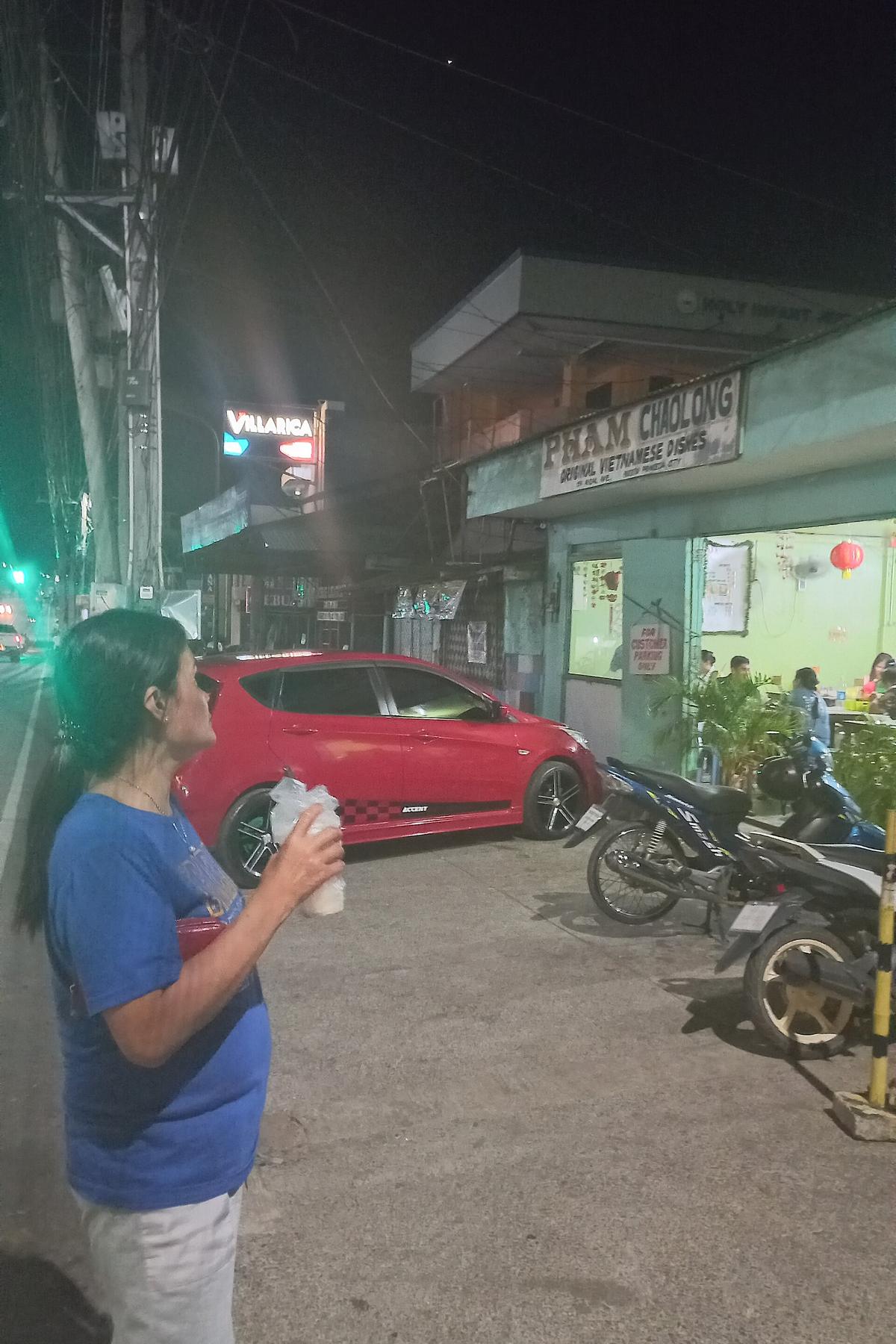
Chao Long and the Vietnamese Thread in Puerto Princesa Food
Chao long origin: Vietnamese refugees brought the dish to the city, post-1975. The base components are rice noodles, beef broth, annatto-coloured meat, bean sprouts, and herbs. The typical condiments, calamansi, fish sauce, chilli paste, and hoisin sauce, sit on every table.
The dish is breakfast and late-night food, served from 06:00 and again from 20:00 to midnight. The best vendors are not on Rizal Avenue but in the barangay markets, particularly in Santa Monica and San Pedro. Look for the steam and the queue of motorcycle taxi drivers. A bowl costs 80-120 PHP, cash only, with unlimited broth refills if you ask.
The Puerto Princesa food scene, concentrated along Rizal Avenue and the bayfront, offers independent sit-down venues with few international chains. Kalui, opened 1996, runs a fixed-menu dinner format with daily changing sets in an art-gallery interior. Reservations essential, 1 week ahead in peak season. Badjao Seafront, north of the city centre, offers a mangrove-boardwalk setting and seafood-focused menu. La Terrasse does French-Filipino in a garden courtyard. Bilao at Palayok, near the airport, serves native chicken and seafood on bilao woven trays, a presentation that references the boodle fight format without the communal eating.
The failure case: you rely on card payment at Kalui or Badjao Seafront, find the machine down, and have no cash for the set menu. Withdraw before dinner, or confirm payment methods when booking.
Island-Hopping Lunch and Tubbataha Liveaboard Dining
Island-hopping lunch inclusion is standardized across El Nido, Coron, and Port Barton tours, though quality varies with boat crew skill. The format: grilled fish, grilled pork or chicken skewers, steamed rice, cucumber-tomato salad, fresh fruit. Preparation happens on portable charcoal grills at beach stops, the crew working while passengers snorkel. Dietary variation requires advance request; vegetarian or vegan alternatives are not standard. Water and soft drinks provided; alcohol not standard but may be brought by guests.
The Tubbataha Reefs liveaboard meal format is different: buffet-style Filipino and international dishes, three full meals plus snacks, prepared by onboard cook. All meals on the vessel; no land-based dining exists in the protected area. The restriction matters for the 5-7 day itinerary: you eat what the boat carries, with no resupply. Special dietary needs must be declared at booking, not embarkation.
The El Nido town food scene, the Coron town food scene, and the San Vicente and Port Barton food scene are separated by hours of rough road and unreliable ferry connections. Do not plan to eat the same dish in multiple towns. Eat what is local, when you are there, or miss it.
The Honest Caveat: When the Food System Fails
The single thing that most often goes wrong with Palawan food is cash dependency colliding with ATM failure. You find the tamilok vendor, the marinated-fish grill, the boodle fight booking, and your card is useless, your cash is gone, and the nearest working ATM is 5 hours away by van on a road that may be flooded. This is not a hypothetical risk. It happens every Sunday evening in El Nido, every holiday weekend in Coron, every time a domestic tourism surge overwhelms the single ATM in Port Barton.
The mitigation is not elegant: withdraw 10,000 PHP in Puerto Princesa, carry it in distributed locations, and spend it down as you travel. The security risk of carrying cash is lower than the certainty of hunger when the system fails. Palawan's food rewards the prepared and punishes the optimistic. Be prepared.
Common Questions
Is tamilok safe to eat?
Tamilok is safe when freshly harvested and prepared with vinegar, which acts as an antimicrobial. The risk is spoilage, not toxicity. Eat only at high-turnover venues, ask when it was harvested, and avoid it during monsoon season when mangrove access is difficult and supply chains slow. The mollusc spoils faster than fish; same-day harvest is ideal.
Why is everything cash-only?
Palawan's infrastructure outside Puerto Princesa cannot support reliable card processing. Power outages roll through El Nido and Port Barton daily, killing card machines. ATMs in El Nido and Coron run dry by Sunday afternoon. Many operators refuse cards even when machines work, due to fees and connectivity failures. Withdraw large amounts in Puerto Princesa, carry small bills for street food, and confirm cash requirements when booking any meal over 500 PHP.
What is the difference between danggit and danggit lamayo?
Danggit is plain dried rabbitfish, salted and sun-dried. Danggit lamayo is marinated in vinegar and garlic before drying, then fried to order. The lamayo preparation is specific to Coron and parts of Mindanao, and creates a crisp, tangy result that plain dried fish cannot match. Do not order danggit lamayo expecting the mild flavour of Cebuano danggit.
Can I get a boodle fight for two people?
Technically yes, practically no. The boodle fight format is communal by design; a spread for two looks sparse and defeats the social purpose. Resorts in San Vicente typically require minimum four persons, or charge a premium for small-group setup. The alternative is plated meals from the same kitchen, same ingredients, no banana-leaf.
What do I eat if I arrive in Port Barton after the generators start?
After 18:00, your options narrow to whatever the guesthouse kitchen has pre-cooked or instant noodles from sari-sari stores. The seafood platter system requires selecting fish at 16:00 when the catch is displayed. Arrive late, eat late, eat poorly. Plan arrival for 15:00 to participate in the evening food economy, or bring emergency provisions from Puerto Princesa.
Read next
-
 Palawan Hotels by Town and Type, From Hostels to Island Resorts
Palawan hotels by town and type: what you trade in comfort, location, and generator hours at each price point from Coron to Port Barton.
Palawan Hotels by Town and Type, From Hostels to Island Resorts
Palawan hotels by town and type: what you trade in comfort, location, and generator hours at each price point from Coron to Port Barton.
-
 Where to Stay in Palawan, Which Town and in What Order
Where to stay in Palawan isn't about the best hotel — it's about which town, in what order, and how many nights before transit steals a day.
Where to Stay in Palawan, Which Town and in What Order
Where to stay in Palawan isn't about the best hotel — it's about which town, in what order, and how many nights before transit steals a day.
-
 Palawan Flights, Which Airport to Fly Into and From Where
Palawan has three airports—PPS, USU, and ENI—and picking the wrong one adds a full day of transit. Here is which airport serves which town and where flights connect.
Palawan Flights, Which Airport to Fly Into and From Where
Palawan has three airports—PPS, USU, and ENI—and picking the wrong one adds a full day of transit. Here is which airport serves which town and where flights connect.
-
 Palawan Things to Do, Town by Town and Tour by Tour
Which Palawan tours earn a full day: El Nido Tour A vs C, Coron wreck dives, Underground River permits, and what's skippable in monsoon season.
Palawan Things to Do, Town by Town and Tour by Tour
Which Palawan tours earn a full day: El Nido Tour A vs C, Coron wreck dives, Underground River permits, and what's skippable in monsoon season.
-
 Best Time to Visit Palawan, Month by Month and Coast by Coast
Palawan month by month: which coast gets calm seas, when boat tours cancel, and how domestic holidays spike prices and crowds regardless of weather.
Best Time to Visit Palawan, Month by Month and Coast by Coast
Palawan month by month: which coast gets calm seas, when boat tours cancel, and how domestic holidays spike prices and crowds regardless of weather.
-
 Getting Around Palawan by Van, Ferry and Plane, With Real Times
Vans wait until full, ferries cross rough seas, and a 90km road can take 5 hours. Real transit times and costs for getting around Palawan.
Getting Around Palawan by Van, Ferry and Plane, With Real Times
Vans wait until full, ferries cross rough seas, and a 90km road can take 5 hours. Real transit times and costs for getting around Palawan.
-
 Coron
Coron town on Busuanga is a functional dive hub with limited beaches—the real draw is Coron Island's lakes and WWII wrecks, reached by bangka day trips only.
Coron
Coron town on Busuanga is a functional dive hub with limited beaches—the real draw is Coron Island's lakes and WWII wrecks, reached by bangka day trips only.
-
 San Vicente
 offers a 14-kilometre Long Beach and low-density Palawan seclusion, but it is an emerging zone with generator power and limited facilities.
San Vicente
San Vicente offers a 14-kilometre Long Beach and low-density Palawan seclusion, but it is an emerging zone with generator power and limited facilities.
-
 Puerto Princesa to El Nido by Van, Bus or Plane, With Real Times
The Puerto Princesa to El Nido van takes 5 to 6 hours on a paved road, but shared vans only depart when full, turning a scheduled trip into a waiting game.
Puerto Princesa to El Nido by Van, Bus or Plane, With Real Times
The Puerto Princesa to El Nido van takes 5 to 6 hours on a paved road, but shared vans only depart when full, turning a scheduled trip into a waiting game.