El Nido or Coron, for Beaches, Lagoons or Wrecks
Choose El Nido for limestone lagoons and island-hopping beaches, or Coron for WWII wreck diving and freshwater lakes — trying both in a week costs a full day on the ferry.


On prices: the figures on this page were gathered in September 2026 and are given as bands rather than current quotes. Rates, fees and timetables change every season - check with the operator before you book.
El Nido or Coron: Which Palawan Base Matches Your Trip
You need to choose between El Nido or Coron before you book anything else. The wrong base wastes days on Philippine roads and boats that should be spent in the water. Pick El Nido if you want to kayak through turquoise lagoons and eat lunch on sandbars inside Bacuit Bay. Pick Coron if you want to dive WWII wrecks and swim in freshwater lakes on Coron Island. Both deliver limestone karst scenery. The activities and the towns themselves are different enough that one will fit your trip and the other will frustrate it.
This is the decision page for someone who already knows they want Palawan but cannot decide which base to pick. The answer depends on what you plan to do, not on which place is prettier. No walkable nightlife. No reliable electricity. Both towns test your patience with cash-only transactions and van schedules that leave when full, not when advertised. Choose one base and stay there. Trying to do both in a week means losing a full day to the ferry and ending up with two rushed half-experiences instead of one proper trip.
What El Nido Does Best
El Nido town sits on the edge of Bacuit Bay, where karst islands rise from water clear enough to spot fish from the boat deck. The town itself is chaotic, overbuilt, and loud. It has grown fast and messy, with construction dust, tricycle exhaust, and power outages that hit without warning. The beach in town is not where you spend your time. You sleep in El Nido town, eat in El Nido town, and leave it every morning on a bangka boat for the bay.
The island-hopping tours are the main event. Tour A and Tour C are the heavy hitters. Tour A hits Big Lagoon, where you kayak through a narrow channel into an open pool of turquoise water. It is tide-dependent. Enter before 09:00. Small Lagoon comes next, a swim-through rock gap that clogs with visitors by 10:00 in peak season. Secret Lagoon is a tiny hidden pool with a claustrophobic entrance you squeeze through sideways. Tour C adds Shimizu Island for lunch and snorkelling, plus Seven Commando Beach, a long sandbar with a coconut stand and afternoon volleyball. Tour B and Tour D exist but see less traffic and have less dramatic lagoons.
Non-divers choose El Nido because the above-water scenery is the attraction. You do not need scuba gear to see the best of Bacuit Bay. Kayaking, swimming, and beach-lunch island hopping are the standard day. The dry season from November to May brings calm seas and reliable boat departures. March to May adds intense heat but guarantees conditions. July to mid-October brings monsoon rains, rough seas that cancel tours, and jellyfish in some lagoons.
What Coron Does Best
Coron town on Busuanga Island is a functional dive hub with limited beaches. The town itself has no beach worth mentioning. Walk to the pier, board a boat, and access everything from there. The attraction is underwater and inland: identified WWII wrecks in Coron Bay, sunk 24 September 1944, sitting at depths from 5 metres for snorkelers to 43 metres for technical penetration dives. The Irako Wreck is the deep prize, a refrigeration ship lying on its side with intact engine rooms and cargo holds for trained divers. Skeleton Wreck is the shallow option, visible at low tide and snorkellable without gear.
Above water, Coron Island delivers two accessible lakes. Kayangan Lake is the postcard shot: a viewpoint climb, then a swim in freshwater that changes temperature as you move. Arrive before 08:00 or share the platform with tour groups. Barracuda Lake is thermocline diving only, with water layers that shift as you descend. Twin Lagoon offers a swim-through or ladder crossing between warm and cold water sections. These are on Coron Island, ancestral Tagbanwa land, where no overnight stays are permitted.
Coron attracts competent scuba divers chasing reefs and wreck penetration. It also suits snorkellers who want wreck access without certification, and travellers who prefer a compact, walkable town base even if the beach is a boat ride away. The same dry season rules apply: November to May for reliable conditions, July to mid-October for cancelled boats and limited visibility.
El Nido vs Coron Palawan: the Town Experience
El Nido town has 18 barangays spread along a busy main road. Accommodation ranges from basic fan rooms to mid-range concrete blocks with intermittent air conditioning. Restaurants cluster on the main strip, serving lato seaweed salad with vinegar and onion, grilled fish, and international backpacker fare. Cash is essential. ATMs run dry by Sunday afternoon. Many operators refuse cards entirely. Power outages roll through unpredictably, killing fans and phone charging.
Coron town has 23 barangays and feels more compact. It is quieter than El Nido, less frantic, with a central market and a pier you can walk to from most hotels. Danggit lamayo, sun-dried rabbitfish marinated and garlic-fried, is the local breakfast specialty. Cashew nuts from Puerto Princesa vendors appear roasted or honey-glazed. The same cash dependency applies. The same power fragility applies. No nightlife worth the name. Bars exist, but they are hotel annexes or early-closing local spots, not destinations.
Both towns are bases, not attractions. You do not come to El Nido for El Nido town. You do not come to Coron for Coron town. The mistake is booking a beachfront resort in either place expecting to stroll to dinner and drinks. El Nido town is louder and more built-up. Coron town is more functional and less oppressive. The beach-town fantasy of Thai islands or Bali does not exist here.
| Factor | El Nido | Coron |
|---|---|---|
| Primary activity | Lagoon kayaking and island-hopping beach lunches | Wreck diving and freshwater lake swimming |
| Best for | Non-divers, photographers, beach-lunch purists | Certified divers, wreck enthusiasts, compact-town preference |
| Town character | Chaotic, overbuilt, loud, 18 barangays | Functional, quieter, dive-hub focused, 23 barangays |
| Beach access | None in town; all beaches require boat | None in town; all beaches require boat |
| Tour designations | Tour A, B, C, D | Coron Island Tour, Reefs and Wrecks, Malcapuya, Calauit Safari |
| Environmental fee | 200 PHP, cash, collected at pier | 150 PHP, cash, collected at pier |
| Typical minimum stay | 3–4 nights | 3–4 nights |
| Combined minimum stay | 7 nights (not recommended) | 7 nights (not recommended) |
Coron or El Nido Comparison: Getting There and Moving Between Them
Your airport decision locks in your base. Puerto Princesa Airport (PPS) is the main international gateway. Shared vans to El Nido take 5 to 6 hours on paved road, costing 600 to 800 PHP. Private vans run 10,000 to 14,000 PHP. The van waits until full. A 09:00 departure can become 11:00 and destroy a day's plan. Book the front seat or accept motion sickness on winding coastal roads.
Coron uses Francisco B. Reyes Airport (USU) in Busuanga. Tricycle to town is 30 minutes, 150 to 300 PHP. No long van ride. No road trauma. AirSwift flies direct Manila to El Nido (ENI) on smaller aircraft, 1 hour 15 minutes, from 6,000 PHP one-way. Manila to Coron flights run roughly 1 hour. Cebu connects to both in about 1 hour 10 minutes. No direct international flights serve ENI or USU. All connect via Manila (MNL) or Cebu.
The ferry between El Nido and Coron exists but should not shape your itinerary. Atienza and Montenegro operate the crossing in 3.5 to 5 hours, roughly October to May, for 1,800 to 2,200 PHP. Rough seas are common. The schedule eats an entire day: morning check-in, crossing, arrival, and the afternoon in your new base is gone. Combined El Nido and Coron itineraries need 7 nights minimum to avoid two rushed half-stays. For 7 days or fewer, pick one base and commit.
If You Still Want Both
Some travellers ignore the one-base recommendation and attempt both anyway. The only clean way is to fly into one airport and out of the other, accepting the ferry as a travel day rather than an activity. Fly Manila to El Nido (ENI), spend 4 nights, ferry to Coron, spend 3 nights, fly Coron (USU) to Manila or Cebu. This costs more in flights, requires booking the ferry in advance during peak season, and still sacrifices a day on the water. The crossing is rough enough that seasickness is common. Bring medication, sit at the back, and do not book onward travel for the arrival day.
The worse option is the round-trip: fly into Puerto Princesa, van to El Nido, ferry to Coron, fly out of Busuanga. This adds the van ride in both directions and the ferry, turning a week into three travel days and four actual days in Palawan. Do not do this. First-timers underestimate how much time they lose to transit and how basic island facilities remain despite premium prices.
El Nido and Coron Differences: Who Should Skip Which
El Nido is not for travellers wanting walkable beach towns with nightlife. It is not for families with very young children or mobility issues; the boat transfers and lagoon entries require physical effort. It is not for luxury-resort seekers expecting slick service. The high-end options are isolated and you are stuck where you land. It is not for anyone on a tight 5-day Philippines trip trying to cram multiple stops.
Coron is not for travellers who want to walk to the beach from their hotel. It is not for non-divers who expect El Nido-level lagoon density; the lake scenery is striking but limited to two accessible lakes. It is not for party seekers. The town shuts down early. It is not for travellers who panic without phone signal; connectivity vanishes on Coron Island and most boat routes.
Both fail travellers who need reliable electricity, consistent hot water, or card payment acceptance. Both punish the underprepared with cash shortages, generator schedules, and booking friction. Both reward adventure-minded couples and small groups who value raw natural beauty over comfort, competent scuba divers chasing reefs, and island-hopping purists willing to trade convenience for seclusion.
Seasonal and Practical Constraints
Peak season runs November to May, driven by dry weather, calm seas for island hopping and diving, and Christmas and Easter domestic surges. March to May brings intense heat but reliable boat conditions. Holy Week sees gridlock in both towns. Chinese New Year week pushes mid-range accommodation prices up sharply.
Avoid July to mid-October. Monsoon rains, rough seas that cancel island-hopping and dive boats, and jellyfish in some lagoons make this a gamble. Palawan sits outside the main typhoon belt but is affected by monsoon trough and occasional typhoons.
Book Tubbataha Reefs 12-plus months ahead if that is your priority. The liveaboard-only marine park runs mid-March to mid-June, 6 to 7 nights, departing Puerto Princesa. This requires advance commitment and certification.
Book Puerto Princesa Underground River permits 2-plus weeks ahead online. The navigable section runs 4.3 km through limestone cave, UNESCO listed, with a total mapped length of 8.2 km. Without a permit, you risk no slot.


Which is Better El Nido or Coron: the Final Call
The answer depends on your certification status and your tolerance for town chaos. If you dive and want wreck penetration, thermocline lake swims, and a quieter base, Coron is better. If you do not dive and want lagoon kayaking, beach lunches on sandbars, and do not mind a louder town, El Nido is better. For luxury, nightlife, or smooth logistics, the answer is neither. Both demand patience and cash reserves.
The most common mistake is trying to split a week between both. The ferry, the van waits, the cash-only environmental fees collected at multiple points, the power outages that kill your phone map when you need it most: these compound until you have spent half your trip in transit. For 7 days or fewer, pick one base. For 10 days, consider the fly-in-one-fly-out-the-other route with the ferry as a travel day. For 5 days, pick one and accept you will not see everything.
El Nido town is louder and more built-up. Coron town is a functional dive hub with limited beaches. No walkable nightlife in either. No beach in town worth the name. The scenery is real, the lagoons are real, the wrecks are real, but the infrastructure is basic and the logistics are demanding. Choose based on activity, not on which looks better in photos. Bacuit Bay's lagoons and Coron Bay's wrecks are different enough that one will fit your trip and the other will leave you wishing you had decided sooner.
Worth it if
- El Nido delivers the densest concentration of kayak-accessible lagoons in Palawan, with Big Lagoon and Small Lagoon as headline experiences that require no scuba certification
- Coron offers identified WWII wrecks in a compact bay, with depths from 5 metres for snorkelers to 43 metres for technical divers, plus two accessible freshwater lakes on Coron Island
- Both bases sit in the November to May dry season window with reliable boat conditions, and both reward travellers who commit to one base rather than splitting a short trip
- Coron town is quieter and more compact than El Nido town, with shorter airport transfers and less construction chaos
- El Nido's Tour A and C itineraries are standardized and bookable on arrival, with enough competition to keep day-trip prices reasonable
Skip it if
- No walkable beach, reliable electricity, or card payment acceptance in either town; both require cash reserves and tolerance for power outages
- The ferry between El Nido and Coron takes 3.5 to 5 hours, operates only roughly October to May, and destroys a full day that should be spent in the water
- El Nido town is overbuilt, loud, and chaotic, with boat tour overcrowding in peak hours that crams visitors into Small Lagoon simultaneously
- Coron has limited above-water attractions for non-divers; the two lakes are striking but the lagoon density is lower than El Nido
- Trying to do both in a week means two rushed half-stays instead of one proper experience, with transit consuming a significant portion of your trip
Read next
-
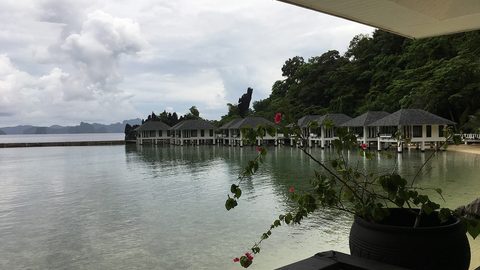
 Palawan Hotels by Town and Type, From Hostels to Island Resorts
Palawan hotels by town and type: what you trade in comfort, location, and generator hours at each price point from Coron to Port Barton.
Palawan Hotels by Town and Type, From Hostels to Island Resorts
Palawan hotels by town and type: what you trade in comfort, location, and generator hours at each price point from Coron to Port Barton.
-
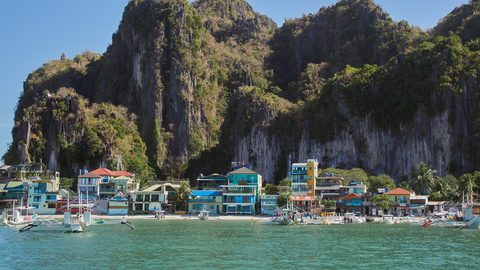 Where to Stay in Palawan, Which Town and in What Order
Where to stay in Palawan isn't about the best hotel — it's about which town, in what order, and how many nights before transit steals a day.
Where to Stay in Palawan, Which Town and in What Order
Where to stay in Palawan isn't about the best hotel — it's about which town, in what order, and how many nights before transit steals a day.
-
 Palawan Flights, Which Airport to Fly Into and From Where
Palawan has three airports—PPS, USU, and ENI—and picking the wrong one adds a full day of transit. Here is which airport serves which town and where flights connect.
Palawan Flights, Which Airport to Fly Into and From Where
Palawan has three airports—PPS, USU, and ENI—and picking the wrong one adds a full day of transit. Here is which airport serves which town and where flights connect.
-
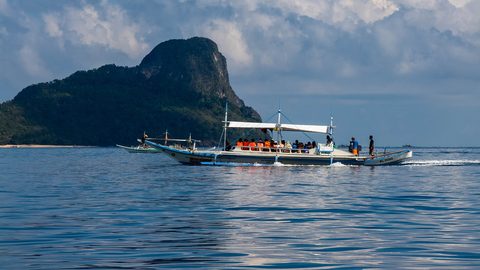 Palawan Things to Do, Town by Town and Tour by Tour
Which Palawan tours earn a full day: El Nido Tour A vs C, Coron wreck dives, Underground River permits, and what's skippable in monsoon season.
Palawan Things to Do, Town by Town and Tour by Tour
Which Palawan tours earn a full day: El Nido Tour A vs C, Coron wreck dives, Underground River permits, and what's skippable in monsoon season.
-
 Best Time to Visit Palawan, Month by Month and Coast by Coast
Palawan month by month: which coast gets calm seas, when boat tours cancel, and how domestic holidays spike prices and crowds regardless of weather.
Best Time to Visit Palawan, Month by Month and Coast by Coast
Palawan month by month: which coast gets calm seas, when boat tours cancel, and how domestic holidays spike prices and crowds regardless of weather.
-
 Getting Around Palawan by Van, Ferry and Plane, With Real Times
Vans wait until full, ferries cross rough seas, and a 90km road can take 5 hours. Real transit times and costs for getting around Palawan.
Getting Around Palawan by Van, Ferry and Plane, With Real Times
Vans wait until full, ferries cross rough seas, and a 90km road can take 5 hours. Real transit times and costs for getting around Palawan.
-
 Coron
Coron town on Busuanga is a functional dive hub with limited beaches—the real draw is Coron Island's lakes and WWII wrecks, reached by bangka day trips only.
Coron
Coron town on Busuanga is a functional dive hub with limited beaches—the real draw is Coron Island's lakes and WWII wrecks, reached by bangka day trips only.
-
 San Vicente
 offers a 14-kilometre Long Beach and low-density Palawan seclusion, but it is an emerging zone with generator power and limited facilities.
San Vicente
San Vicente offers a 14-kilometre Long Beach and low-density Palawan seclusion, but it is an emerging zone with generator power and limited facilities.
-
 Puerto Princesa to El Nido by Van, Bus or Plane, With Real Times
The Puerto Princesa to El Nido van takes 5 to 6 hours on a paved road, but shared vans only depart when full, turning a scheduled trip into a waiting game.
Puerto Princesa to El Nido by Van, Bus or Plane, With Real Times
The Puerto Princesa to El Nido van takes 5 to 6 hours on a paved road, but shared vans only depart when full, turning a scheduled trip into a waiting game.