How to Plan Palawan Ferry Days When Island Schedules Change
Plan ferry days around El Nido, Coron, and Port Barton with port checks, weather updates, booking advice, cash reserves, and backup lodging.
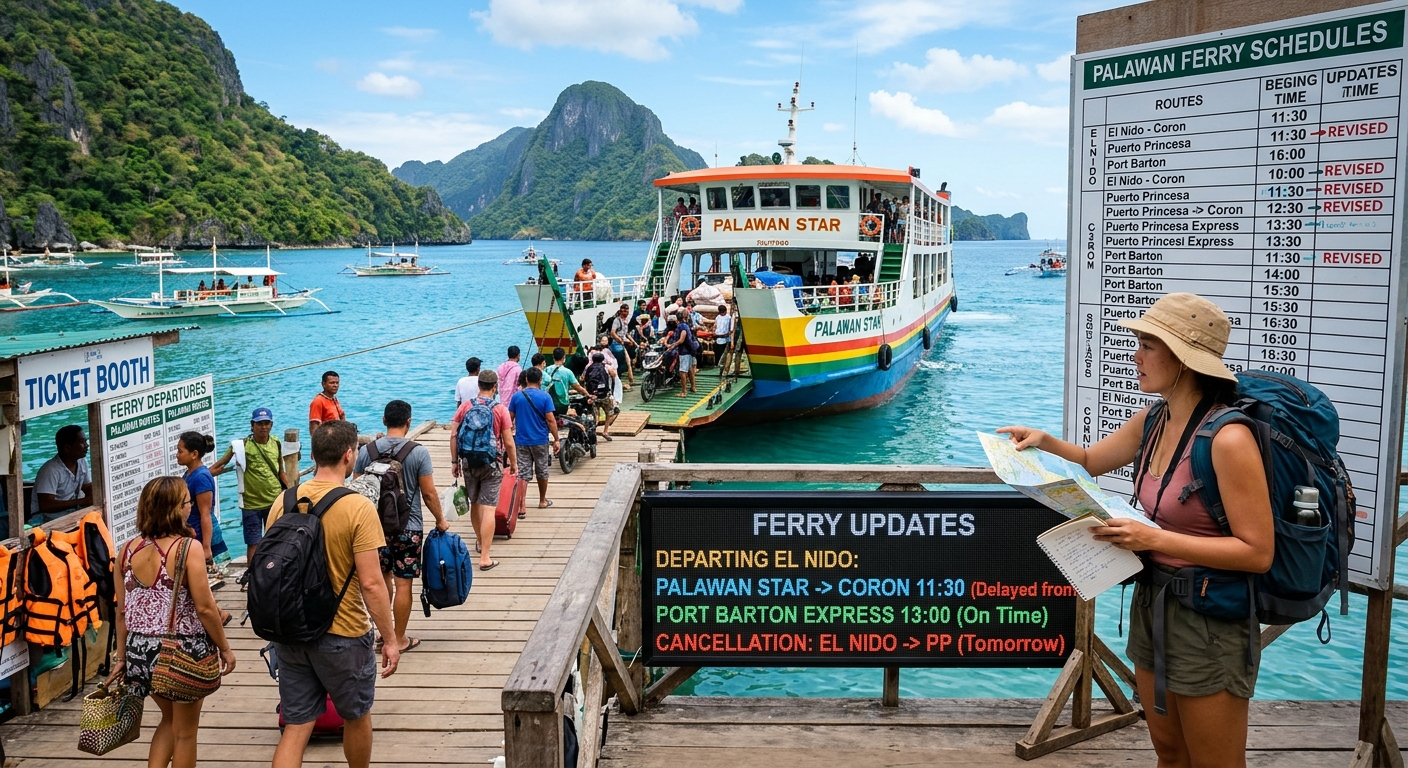
Your room in Coron is booked. Your bag is packed in El Nido. Then a message arrives saying the ferry is under review because of sea conditions. That single update can affect tonight’s bed, tomorrow’s tour, and your flight home. A workable Palawan itinerary gives ferry days room to change. It also treats El Nido, Coron, and Port Barton differently, because they do not fit into one continuous ferry route.
Three Rules for a Calmer Crossing
- Confirm your sailing, terminal, and check-in deadline directly before travel.
- Keep spare cash and a backup room available for disruption.
- Leave a buffer night before any flight you cannot afford to miss.
Build the Route Around the Actual Connections
El Nido and Coron are connected by passenger ferries. Port Barton belongs in a different part of your transport plan. For an itinerary linking all three places, plan the Port Barton to El Nido leg by road, then handle the El Nido to Coron crossing as a separate booking.
Do not assume a coastal town has a scheduled passenger boat to your next destination. A local island-hopping boat, a private charter, and an intertown ferry serve different purposes. A boat offered locally may also have different baggage arrangements, boarding conditions, and weather restrictions.
For the El Nido to Coron crossing, reserve most of the day for travel. Advertised fast-ferry journeys commonly run several hours, but the ticketed duration excludes hotel transfers, check-in, boarding, and collecting your bags. Ask the operator for the expected duration of your specific vessel. Avoid putting a prepaid tour immediately after arrival.
If you are starting in Port Barton, sleeping in El Nido before the ferry removes one major dependency. A delayed van then costs you part of an evening rather than your sea crossing. A same-day road transfer may be possible for some departures, but it needs a generous margin and a confirmed vehicle arrangement.
Get a Booking Confirmation You Can Actually Use
A payment receipt does not always contain everything needed to board. Read the confirmation for the operating company, travel date, route direction, passenger names, departure time, and booking reference. Check whether you must exchange a voucher for a ticket at an office or counter.
Ask where that exchange happens. A ticket office and a passenger terminal may be separate places. Save the location pin and written instructions while you have a reliable connection. Check that the name on your booking matches the identification you will present.
Before paying, read the cancellation and rebooking conditions. Ask who handles changes if you book through an agent. Refund processing, replacement seats, and accommodation costs are separate questions. Do not assume a canceled sailing automatically includes a hotel room or immediate repayment.
Get a current total in Philippine pesos. Ask whether the quote includes baggage and any applicable terminal charges. Published fares can change, and a low headline price may not cover every part of the journey. A written breakdown is more useful than an old fare screenshot.
Use a Simple Confirmation Routine Before Departure
One check when you book is not enough for a weather-sensitive crossing. Use this sequence to keep your information current without spending your whole holiday refreshing messages.
- Two days before travel: Contact the operator or booking agent. Confirm that your reservation is recorded and ask whether any schedule changes are expected.
- The evening before: Recheck the departure time, exact terminal, check-in deadline, and voucher exchange requirements. Arrange your hotel pickup around those instructions.
- Before leaving your room: Check for overnight messages and ask whether the sailing remains scheduled. Keep your accommodation contact available until boarding is settled.
- At the terminal: Follow the operating staff’s boarding instructions. If the trip changes, get the revised departure details or cancellation process in writing where possible.
A sailing marked as scheduled can still change later. Confirmation tells you what is planned at that moment. It does not override a safety decision made before departure.
Reach the Right Port With Time to Spare
El Nido: Separate Checkout From Check-In
Ask your operator to identify the passenger terminal for your sailing. Give that location to your driver rather than asking only for “the port.” Confirm whether ticket collection must happen elsewhere first.
Use the operator’s required arrival time. If no clear instruction is provided, ask directly and allow a generous margin, often at least an hour before departure. That is a planning allowance, not a universal check-in rule. A ticket with an earlier deadline takes priority.
Have breakfast and buy drinking water before you enter the boarding process. Keep identification and booking documents in your hand luggage. If your hotel is outside town, allow extra transfer time rather than calculating from the town center.
Coron: Confirm the Passenger Terminal and Transfer
Coron itineraries often mix ferry transfers, airport journeys, and tour-boat departures. These are separate movements. Confirm the terminal for your ferry and arrange transport from your accommodation specifically for that location.
For an early sailing, settle your hotel bill the night before and confirm how you will leave the property. Ask whether reception will be staffed. Keep breakfast simple and have your bags ready before your driver arrives.
On arrival, allow time to collect luggage and reach your accommodation. Send your hotel the ferry’s expected arrival time, then update it if the crossing changes. Avoid promising an exact hotel arrival based only on the timetable.
Port Barton: Protect the Road Leg First
For travel toward El Nido, confirm your van’s meeting point, departure time, and drop-off location. Ask whether pickup is at your accommodation or another meeting point. A departure from Port Barton does not automatically include delivery to the ferry terminal.
If you are staying at a beach property reached by boat, account for that transfer separately. Ask the property how you would reach town if local boat movements were interrupted. That detail can matter before your main journey has even started.
Read Marine Weather Before Reading the Sky
A bright morning at your hotel is not evidence of comfortable conditions along the full crossing. Wind, waves, and conditions beyond the bay can affect the voyage even when the waterfront looks calm.
Check PAGASA’s gale warnings for marine weather information. Read the bulletin’s issue time and affected areas. An old screenshot may describe conditions that have already changed. The absence of a gale warning also does not confirm that your particular ferry will depart.
The Philippine Coast Guard’s heavy-weather guidelines govern vessel movements during hazardous weather. Follow local Coast Guard instructions and your operator’s current sailing advice. A ticket reservation cannot guarantee permission to sail.
Seasonal labels help with broad planning, but they cannot decide a specific travel day. Rough conditions can interrupt trips outside the months travelers usually associate with rain. Keep checking actual marine guidance as your departure approaches.
Keep Updates Available Before You Lose Signal
A working phone helps you receive schedule changes, contact your accommodation, and rearrange pickups. If you plan to use an eSIM for access to updates, check device compatibility and the service details before departure. Set it up while you still have dependable internet access.
Signal is not guaranteed at sea or on remote islands. Do not depend on receiving a message midway through the crossing. Download your ticket, identification requirements, accommodation address, and transfer instructions before boarding.
Save the operator’s contact details and your booking agent’s details separately. Carry a charged power bank. Tell anyone collecting you that a delayed reply may reflect a lost connection rather than a travel emergency.
Carry Cash for a Delay, Not Just a Ticket
Build your cash reserve around what an extra day would cost you. Include a basic room, meals, drinking water, local transport, and possible booking changes. Keep that reserve separate from your ordinary spending money.
Withdraw money before departure day. An ATM visit becomes stressful when it sits between hotel checkout and a boarding deadline. Carry smaller notes for local transport and minor payments, and ask which charges can be paid by card.
Keep enough money accessible without opening your main luggage. Protect the rest from water and accidental loss. If a sailing is canceled, retain receipts and written notices for any refund request or travel insurance claim. Reimbursement depends on the relevant booking and policy terms.
Choose Your Backup Bed Before Rooms Fill
Before departure day, identify one accommodation you could return to and another nearby option. Ask your current property whether extending would be possible, but treat availability as uncertain until a room is confirmed.
In El Nido, a backup room near your departure arrangements can reduce transport costs during a delay. In Coron, prioritize reliable access to the passenger terminal if you expect an early replacement sailing. In Port Barton, consider whether reaching your accommodation requires another boat ride.
If the ferry is canceled, handle the replacement journey and tonight’s room promptly. Ask whether your ticket transfers automatically or needs rebooking. Then contact your destination accommodation about late arrival or a missed night. Keep those conversations separate so each business knows what you need.
Do not assume tomorrow’s sailing has unlimited space. A resumed service may need to accommodate passengers from earlier cancellations. Ask when your replacement seat becomes confirmed.
Give Your Flight a Separate Travel Day
Booking a ferry and a flight on the same day creates a fragile connection. A timetable that appears to leave several spare hours can collapse after one delayed departure. Flight check-in deadlines and airport transfers still apply after you reach land.
A buffer night at your departure destination is a sensible minimum planning choice before an expensive or inflexible flight. Add more room when weather is unsettled or the cost of missing the flight would be severe. No fixed buffer removes every risk.
There is no road transfer between Coron and El Nido. If the ferry stops operating, compare the total cost and availability of alternative flights with the cost of waiting. Do not assume an air route will have seats or operate unaffected during the same weather event.
Leave Room for the Next Safe Sailing
The strongest Palawan plan has a clear route and a flexible edge. Reach El Nido before your Coron crossing when possible. Treat Port Barton’s road and local boat arrangements as separate bookings. Keep your documents offline, your cash reserve intact, and a realistic place to sleep within reach.
If the schedule changes, focus on the next confirmed step: a replacement seat, a room, or an updated pickup. You do not need to rebuild the entire holiday at the terminal. You need enough breathing room to wait for a safe departure without turning one disrupted ferry day into several missed bookings.