Diving the Coron Wrecks, Skeleton to Irako, by Depth
Coron wrecks diving spans Skeleton Wreck at snorkel depth to Irako Wreck at 43 metres. Here is the depth ladder, certification needed, and the Coron Bay September 1944 history.
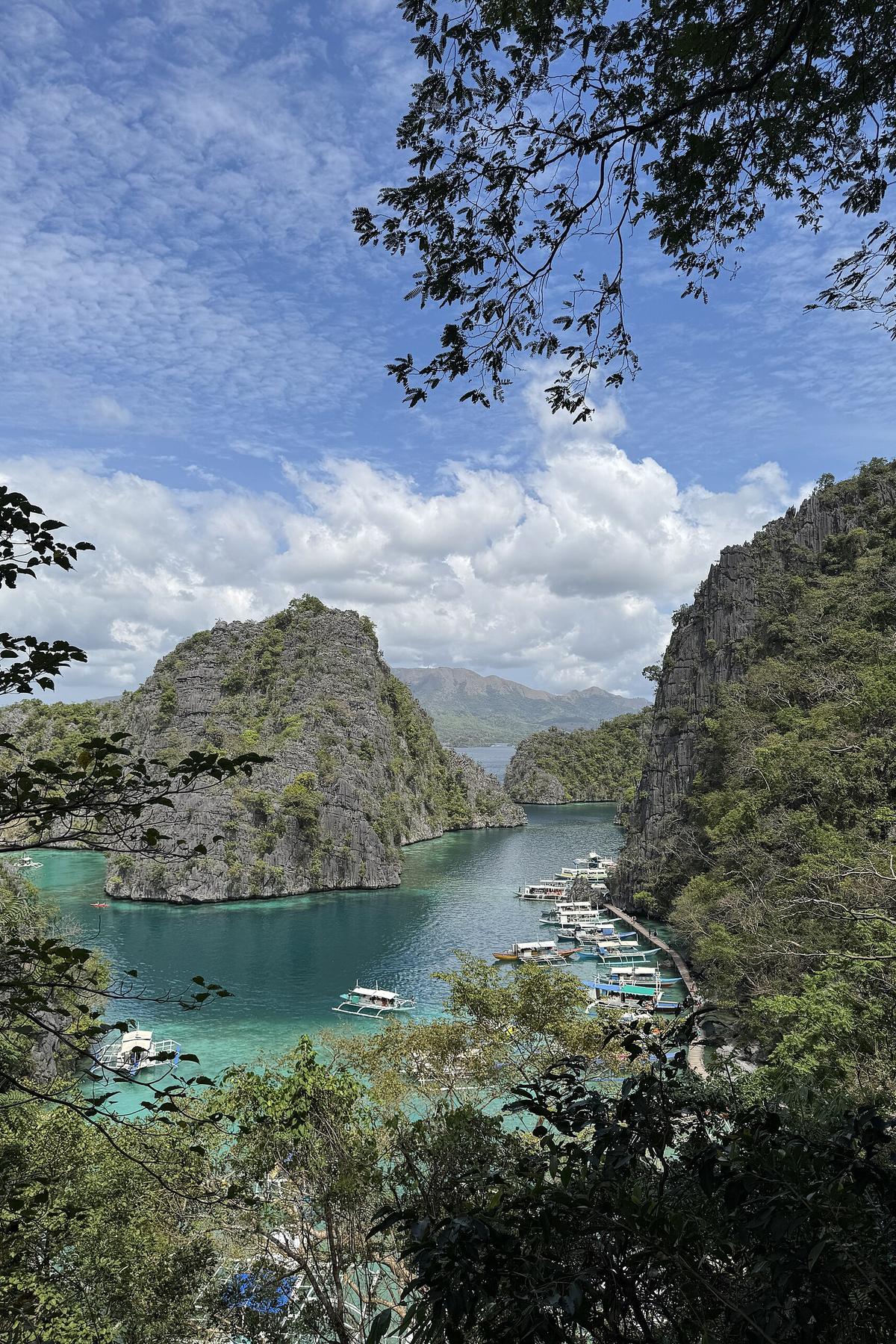

Coron Wrecks Diving Skeleton to Irako
No single dive card covers every Coron wreck. The shallowest sits at two metres, the deepest at forty-three. The difference is the whole game. Your certification, plus the month you visit, decides which of these sunken WWII Japanese ships you can actually reach.
On 24 September 1944, US Navy aircraft from Task Force 38 sank a Japanese supply fleet sheltering in Coron Bay. A dozen wrecks lie scattered around Busuanga Island, each at a different depth. Coron town is the dive hub. The southwest monsoon runs July to mid-October, cancelling boats and churning up the visibility. Book for the dry months, November to May, when the water clears to thirty metres and dive operators run daily.
- Best Time to Dive: November to May for calm seas and 15-30m visibility
- Water Temperature: 26-30°C year-round
- Dive Shop Count: 35-45 operators in Coron town (2024 figure)
- Primary Challenge: Depth range from 2m (snorkel) to 43m (technical)
- Essential Booking: Secure a spot with a Coron town dive operator; no advance permit needed for wrecks
Skeleton Wreck Coron Snorkel Low Tide
The Skeleton Wreck is your entry point. No certification required. This 25-metre vessel, likely a small cargo ship or fishing boat, sits in just two to five metres of water. At the lowest tide its stern breaks the surface. Anyone who can swim can snorkel it.
Book a standard Coron Island lakes tour; most itineraries include a stop here. Your boat anchors nearby and you snorkel over the clearly visible outline. At low tide you get a sharp view of the coral-encrusted structure. This is one of only two wrecks genuinely open to non-divers.
The Lusong Gunboat Snorkel
The other is the Lusong Gunboat, a 35-metre patrol boat whose stern also rises to the surface at low tide. Its maximum depth is twelve metres, so the upper sections are easy to see from the surface. Most full-day island tours from Coron town stop at either the Skeleton Wreck or the Lusong Gunboat, rarely both. Confirm which one when you book.
Open Water Wrecks: Okikawa Maru to Akitsushima
An Open Water certification opens up the big fleet supply ships. These wrecks sit between ten and thirty-six metres. Their decks and superstructures fall within your eighteen-metre limit. Their keels lie deeper.
Start with the Okikawa Maru, a 168-metre oil tanker. Its shallowest point is at ten metres, the deck at sixteen to eighteen, the seabed at twenty-six. Operators run this as a first dive of the day. The Olympia Maru, a 122-metre cargo ship, is another solid pick: deck at eighteen metres, maximum depth at thirty.
The Akitsushima is a step up. This 118-metre seaplane tender starts at twenty-two metres and rests on a slope reaching thirty-six. Stay above eighteen metres and you miss most of it. Get an Advanced Open Water certification or book a guided deep dive with an instructor to see the wreck properly.
What to Expect on a Coron Wreck Dive
Coron Bay is a working environment, not a sanitised dive park. Expect strong thermoclines, sudden shifts from warm to cold water. Currents can be unpredictable. Most Coron town dive operators require you to have dived within the last year or to complete a checkout dive first. Ask for nitrox blends; they give you longer bottom times on these deeper profiles. You need the certification to use them.
Irako Wreck Coron Technical Dive 43m
The Irako is the deepest of the main wrecks and the reason technical divers come to Coron. This 147-metre refrigeration ship has its uppermost point at twenty-eight metres. Its keel rests at forty-three. The entire structure sits beyond the forty-metre recreational limit.
Penetration is possible inside the Irako, with swim-throughs into vast cargo holds and engine rooms. This is not a dive for the newly certified. You must hold at least an Advanced Open Water certification with a Deep specialty. Most reputable Coron operators will ask for proof of technical certification and penetration experience before they take you. The dive plan involves mandatory decompression stops. A nitrox blend or trimix is standard.
Book a two-dive day trip from Coron town. The Irako is the primary dive; follow it with a shallower wreck like the Kogyo Maru, a cargo ship sitting between twenty-two and thirty-four metres. That second dive works well for Advanced Open Water divers and lets you decompress after the deep profile.
Coron Bay WWII Japanese Wrecks
The fleet was caught at anchor, believing itself hidden among the islands, when US fighters found it. The sinking was swift and the ships landed remarkably intact on the seabed. You see that history in the details: the Akitsushima still has its massive crane for lifting seaplanes, and the Irako's refrigeration machinery remains in place.
That history shapes your dive. The ships were loaded with supplies. You will see truck tyres on the Okikawa Maru and sake bottles inside the Irako. The wrecks are now artificial reefs, encrusted with soft corals, holding schools of batfish, barracuda, and resident lionfish.
To grasp the scale, book a multi-wreck package with a Coron town operator. A two-tank trip visits two different wrecks, giving you a cross-section of the destruction. Dedicate three to four diving days in Coron. Work your way from the shallow snorkel sites up to the deeper technical challenges.
Coron Wreck Dive Operator Busuanga
Your dive hinges on the operator you choose. Coron town, on Busuanga Island, had between thirty-five and forty-five dive shops as of 2024. They range from backpacker day boats to technical specialists running full mixed-gas support.
Book directly in town. Arrive, wait a day or two, assess the weather and sea conditions, then commit. Do not pre-book online from abroad for a specific date. The southwest monsoon from July to mid-October frequently grounds all boats. Reputable operators will be transparent about their safety records, guide credentials, and gas mixes. They should brief you on each wreck's profile, current potential, and penetration rules before you board.
Budget for extras. The dive trip price rarely includes the environmental fee, paid in cash at the port. That fee covers reef conservation and is collected by the local tourism office; the amount changes, so ask your operator for the current figure. Also carry cash for gear rental. Most island ATMs run dry by Sunday afternoon.
Who Should Dive the Coron Wrecks
This is for competent, current divers comfortable with variable conditions and deep profiles. It suits adventure-minded couples and small groups chasing raw history over luxury.
Who Should Skip It
Skip the Coron wrecks if you are a new Open Water diver with fewer than twenty logged dives, or if you demand perfect visibility every day. The logistics and depth demands make it a poor choice for families with young children or anyone on a tight five-day Philippines itinerary. If you cannot dedicate a full week to Palawan, pick Coron or El Nido, not both. The ferry between them eats an entire day.
Common Questions
Can you snorkel the Coron wrecks?
Yes, but only two wrecks are shallow enough: the Skeleton Wreck (2-5m) and the Lusong Gunboat (0-12m). Both are accessible on standard island-hopping tours from Coron town, but only at low tide.
What is the best wreck for beginner divers in Coron?
The Okikawa Maru is the best for beginner Open Water divers. Its shallowest point is at 10 metres, and the deck sits around 16-18 metres, well within the 18-metre limit. The Olympia Maru is another good, shallower option.
How deep is the Irako wreck?
The Irako wreck sits with its uppermost point at 28 metres and its keel at 43 metres. This makes it a technical dive requiring certification beyond Advanced Open Water, often with trimix and penetration training.
When is the worst time to dive the Coron wrecks?
The worst time is during the southwest monsoon, from July to mid-October. Rough seas frequently cancel boats, and plankton blooms reduce visibility to 5-15 metres.
Do I need technical certification to dive all the Coron wrecks?
No. Only the Irako wreck requires technical certification. Wrecks like the Okikawa Maru, Olympia Maru, and Kogyo Maru are within reach of Open Water divers, while the Akitsushima is better suited for Advanced Open Water divers due to its 22-36 metre depth range.
How many dive shops are in Coron?
Coron town has an estimated 35-45 dive shops as of the 2024 count. This includes operators catering to everything from introductory dives to full technical expeditions.
What is the water temperature in Coron Bay?
The water temperature ranges from 26°C to 30°C year-round. However, thermoclines are common, and you can experience sudden cold layers, especially on deeper wrecks.
Read next
-
 Coron Hotels for Divers and Early Boats to the Lakes
Coron hotels chosen for dive-gear logistics and an early start to Coron Island's lakes: walking distance to the pier, breakfast before 7am, and a dry bed in a functional town.
Coron Hotels for Divers and Early Boats to the Lakes
Coron hotels chosen for dive-gear logistics and an early start to Coron Island's lakes: walking distance to the pier, breakfast before 7am, and a dry bed in a functional town.
-
 Kayangan Lake
 on Coron Island demands a before-8am arrival for the viewpoint photo. Learn Tagbanwa ancestral access rules, the Coron town bangka trip, and swimming conditions.
Kayangan Lake
Kayangan Lake on Coron Island demands a before-8am arrival for the viewpoint photo. Learn Tagbanwa ancestral access rules, the Coron town bangka trip, and swimming conditions.
-
 Calauit Safari Park
 on Busuanga requires a ferry and road trip from Coron town to see African animals translocated in 1976. Here is the full-day logistics and entrance cost.
Calauit Safari Park
Calauit Safari Park on Busuanga requires a ferry and road trip from Coron town to see African animals translocated in 1976. Here is the full-day logistics and entrance cost.
-
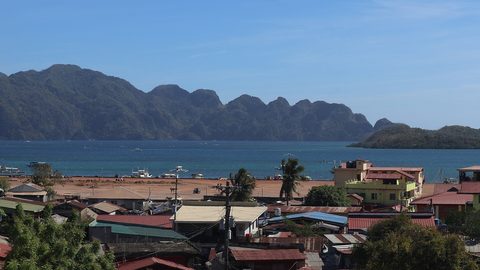 Coron Island Hopping, Kayangan, Twin Lagoon and Which Tour to Book
Coron island hopping runs one main route from Coron town covering Kayangan Lake, Twin Lagoon, Barracuda Lake, and Skeleton Wreck for 1,500 to 1,800 PHP.
Coron Island Hopping, Kayangan, Twin Lagoon and Which Tour to Book
Coron island hopping runs one main route from Coron town covering Kayangan Lake, Twin Lagoon, Barracuda Lake, and Skeleton Wreck for 1,500 to 1,800 PHP.
-
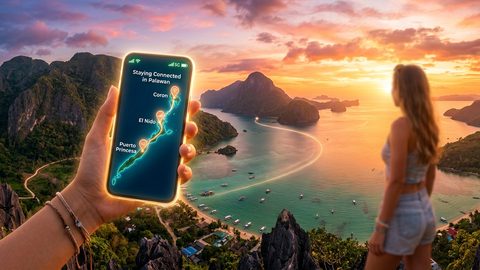 Staying Connected in Palawan From Puerto Princesa to El Nido and Coron
Stay connected from Puerto Princesa to El Nido and Coron. Know when to save maps, tickets, and bookings before vans, ferries, and island tours.
Staying Connected in Palawan From Puerto Princesa to El Nido and Coron
Stay connected from Puerto Princesa to El Nido and Coron. Know when to save maps, tickets, and bookings before vans, ferries, and island tours.